

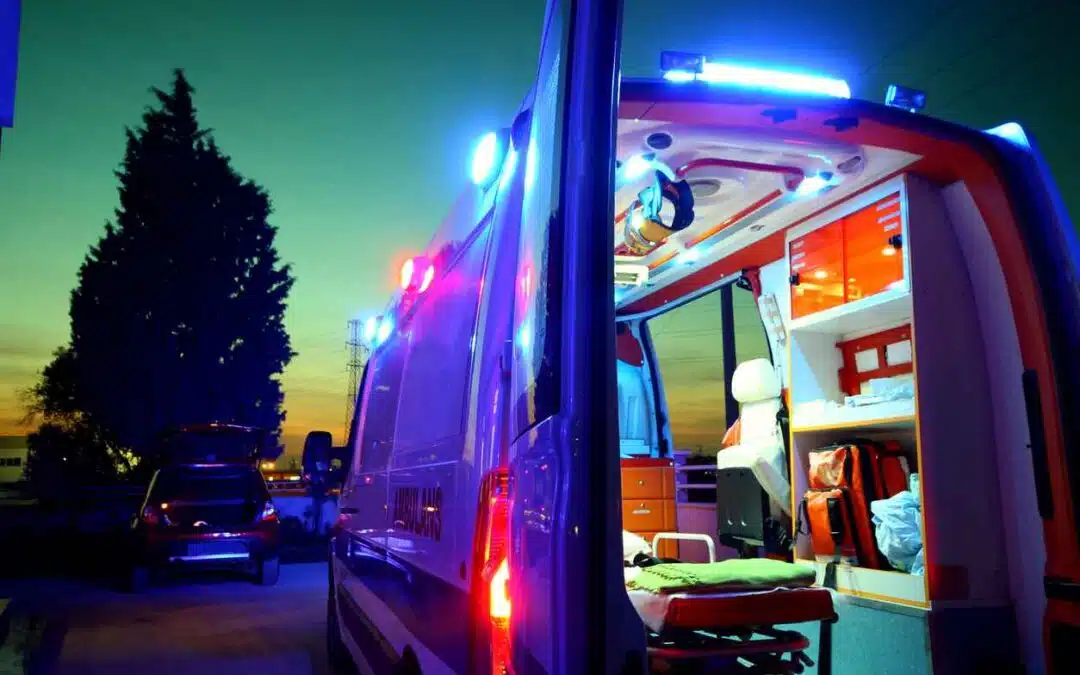
Emergency scenes rarely unfold under ideal conditions. A vehicle rollover on an unlit rural road, a structure fire behind a darkened building, or a complex nighttime rescue all present severe operational challenges. First responders frequently operate in environments complicated by uneven terrain, debris, moving traffic, rain, or smoke.
In these environments, darkness is a critical threat. Poor visibility hides trip hazards, obscures essential tools, delays patient care, and leaves responders vulnerable to approaching motorists. Consequently, properly configured emergency vehicles require far more than warning lights alone. High-visibility scene lighting establishes a safe, functional workspace around the vehicle—enabling personnel to identify hazards, move with confidence, and execute critical tasks when every second counts.
While modern LED technology generates substantial illumination with low electrical demand, effective scene lighting requires more than installing the brightest available fixtures. True operational utility depends on a balanced combination of beam pattern, mounting placement, coverage, glare control, durability, and power capacity.
Discuss Your Vehicle Upfitting with Our Experts
Why High-Visibility Scene Lighting Matters
First responders must evaluate unfamiliar, high-risk environments within seconds of arrival. While daylight reveals obvious hazards, nighttime conditions obscure even basic surroundings.
Faster Hazard Identification
A curb disappears into shadow, broken glass blends into asphalt, and steep embankments remain unseen until personnel reach the edge. Depending on the incident, responders must rapidly identify:
- Terrain hazards: Uneven ground, ditches, or open excavations
- Debris & fluids: Vehicle fragments, broken glass, spilled fuel, oil, or water
- Infrastructure risks: Downed power lines or damaged structural elements
- Operational equipment: Hoses, cables, tools, and medical kits
- Personnel & victims: Safe access routes, patients, or bystanders outside the central work zone
Real-world incidents illustrate the consequences of inadequate lighting. In one documented case, a firefighter operating behind a residence at night fell into an unilluminated six-foot excavation. The hazard itself was straightforward; the failure stemmed entirely from a lack of scene visibility. Proper lighting transforms an unpredictable environment into a space crews can assess instantly.
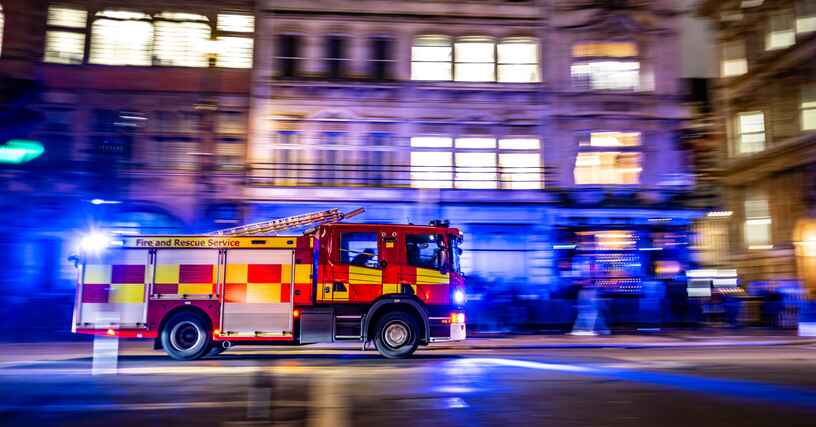
Streamlined Task Execution
Visibility directly impacts operational speed and efficiency:
- Firefighters must quickly retrieve tools, deploy hose lines, connect equipment, and navigate around the apparatus.
- EMS personnel need clear illumination to assess trauma, prepare medical equipment, and safely transfer patients.
- Law enforcement officers must document evidence, manage scene perimeter access, and maintain awareness near moving traffic.
Inadequate lighting forces responders to waste crucial time repositioning flashlights or navigating deep shadows. Uniform scene illumination keeps their focus entirely on the mission.
Key Factors of Effective Emergency Scene Lighting
While lumen output is often the first specification fleets evaluate, total brightness alone does not guarantee performance. A high-output fixture delivers little value if its light is misdirected or poorly distributed. Effective emergency lighting balances brightness with coverage, beam architecture, color temperature, and power efficiency.
LED Efficiency and Lower Power Demand
LED technology has revolutionized emergency fleet illumination. For context, a traditional 500-watt halogen scene light produces approximately 10,500 lumens. In contrast, a modern LED fixture consuming just 150 to 220 watts generates 15,000 to 20,000 lumens.
This efficiency is vital for emergency vehicles running multiple high-demand electrical loads simultaneously, including:
- Mobile radios and communications systems
- Emergency warning lightbars
- Onboard computers and CAD terminals
- HVAC units and battery charging stations
Transitioning to LED scene lighting delivers several operational advantages:
- High light output from compact, low-profile fixtures
- Substantially lower electrical demand on the vehicle alternator
- Instant-on performance with zero warm-up delay
- Extended operational lifespan with minimal bulb replacement
- Flexible beam options, including flood, spot, and combination patterns
- Multi-stage brightness controls on advanced systems
For fleets engineered to remain in active service for years, lower maintenance demands maximize overall vehicle return on investment.
Strategic Beam Patterns Over Raw Output
More lumens do not automatically create a safer scene. A narrow spot beam throws light across long distances but leaves immediate work zones in darkness. Conversely, a wide flood beam creates exceptional near-field visibility but lacks long-range reach.
- Flood patterns illuminate broad perimeter zones around the apparatus.
- Spot patterns project concentrated light toward distant hazards or targets.
- Combination patterns integrate both near-field and far-field coverage within a single fixture.
Instead of asking how bright a fixture is, fleet designers must evaluate where that light travels. Systems must be engineered around the specific zones where responders walk, retrieve tools, treat patients, and operate heavy equipment.
Color Quality and Object Recognition
Light quality directly influences visual clarity. Modern LED scene lights typically produce a crisp, white light rated between 4,000K and 5,500K—closely mimicking natural noon daylight (5,000K)—compared to the yellowish 3,000K output of legacy halogen bulbs.
Furthermore, fixtures with a high Color Rendering Index (CRI) display colors more accurately. High-CRI daylight illumination helps personnel quickly distinguish fluid types, assess skin pallor during patient triage, and identify subtle details on hazardous materials containers.
Plan Your Lighting with Our Team
Improving Safety Through Strategic Light Placement
Fixture placement and aiming angles dictate overall lighting efficacy. Poorly positioned fixtures create deep shadows behind the vehicle, while improperly angled lights blind personnel and oncoming traffic.
Elevated Lighting for Broader Coverage
Positioning fixtures as high as possible on the apparatus distributes light evenly across the work zone while minimizing harsh, low-angle shadows.
- Roof-mounted lights: Provide extensive perimeter visibility.
- Side-facing lights: Illuminate tool compartments and side work areas.
- Rear scene lights: Safeguard loading, staging, and equipment access zones.
- Low-mounted perimeter lights: Light up ground steps and immediate footpaths.
- Deployable elevated towers: Flood expansive incident scenes from high overhead.
Combining multiple mounting positions creates a uniform blanket of light that far outperforms a single, high-intensity fixture.
Minimizing Glare for Responders and Motorists
Excessive or poorly directed light can work against first responders. Rain, wet pavement, reflective vehicle graphics, windshields, and smoke frequently bounce blinding glare back into the eyes of crews and passing drivers.

Federal highway safety studies emphasize that overly intense emergency lighting can disorient approaching motorists at night. Reducing warning-light intensity after arriving on scene—while maintaining steady, downward-directed scene lighting—dramatically improves responder safety.
- Warning lights signal the presence of an emergency vehicle.
- Scene lights illuminate the active workspace for personnel.
To optimize scene illumination without introducing glare:
- Mount fixtures high and tilt beam angles downward toward the work zone.
- Direct light away from approaching traffic lanes.
- Fill ambient shadows rather than overlapping high-intensity beams on a single spot.
- Dim or turn off forward-facing warning lights once traffic control is established.
- Continuously evaluate scene lighting from the perspective of both responders and oncoming motorists.
Fixed, Portable, and Elevated Lighting Configurations
Because no single light source addresses every scenario, a layered strategy combining fixed, elevated, and portable lighting offers maximum tactical adaptability.
1. Fixed Vehicle-Mounted Scene Lights
Permanently mounted lights provide immediate, hands-free illumination the moment the vehicle shifts into park. They safeguard critical operational zones, including:
- Equipment compartments and side work areas
- Rear access doors and patient loading steps
- Immediate perimeter walkways
Because fixed lights require zero setup time, they form the essential foundation of emergency vehicle scene illumination.
2. Elevated Lighting Systems
When incidents expand beyond the vehicle’s immediate perimeter—such as multi-vehicle highway collisions, structural fires, or night search operations—elevated light towers become essential. Elevating the light source casts a wide shadow-free beam over obstacles, revealing hidden terrain hazards across large operational areas.
3. Portable Battery-Powered Scene Lights
Vehicle-mounted lights cannot always illuminate areas behind buildings, over guardrails, down steep ravines, or inside structures. Portable scene lights bridge this gap seamlessly.
Modern battery-powered units eliminate trailing power cords, removing trip hazards while accelerating deployment. High-performance portable lights offer up to 10,000 lumens of high-intensity output, featuring variable power modes that extend battery runtime across long operational shifts. Many models also accept direct AC or DC external power for extended incidents.
Talk to Us About Custom Configurations
Planning Scene Lighting During Vehicle Upfitting
Scene lighting achieves peak performance when integrated directly into the initial vehicle upfit plan rather than added as an afterthought.
| Framework Step | Objective |
| 1. Operational Needs | Identify primary work zones (Side/Rear) |
| 2. Beam Architecture | Match Spot, Flood, or Combo to mission |
| 3. Power Budget | Balance LED draw with alternator capacity |
| 4. Hardware Quality | Select weather- and vibration-proof units |
| 5. Tactical Hybrid | Combine Fixed, Elevated, and Portable units |
1. Define Primary Operational Roles
Upfitters and department planners should begin by evaluating how and where the vehicle operates:
- Which sides of the vehicle serve as primary work zones?
- Does the vehicle frequently operate on unlit rural roads or multi-lane highways?
- Do crews require wide-area flood coverage or long-range spot lighting?
- What is the vehicle’s total available auxiliary power capacity?
- Will responders routinely operate away from the vehicle chassis?
2. Evaluate Total System Quality
Beyond lumen ratings, fleet managers should evaluate specifications that ensure long-term reliability:
- Beam versatility: Spot, flood, or hybrid optical combinations
- Structural durability: Resistance to extreme moisture, impact, and vibration
- System adjustability: Ability to swivel, tilt, or dim fixtures on demand
- Serviceability: Accessibility of wiring and replacement parts over the vehicle’s lifecycle
- Portable integration: Battery charging mounts and secondary power connections
Integrate Scene Visibility into Your Upfit Strategy
First responders cannot choose when or where an emergency occurs, nor can they control ambient weather and darkness. However, departments can equip them with vehicles built to overcome those conditions.
Effective scene lighting harmonizes high-output LEDs, functional beam patterns, strategic mounting, glare control, and portable battery options. The ultimate objective is not merely making a vehicle brighter, but casting usable light exactly where personnel must see, move, and make life-saving decisions.
At TCS Upfitting, we specialize in integrating high-visibility scene lighting into custom, mission-ready vehicle configurations. By designing lighting packages around actual field operations, we ensure every fixture, switch, and power draw serves a clear purpose. When seconds count, clear visibility turns chaotic scenes into controlled, efficient emergency responses.
Consult Our Upfitting Experts for Recommendations
Frequently Asked Questions
1. Should Scene Lights Run Directly Off The Vehicle’s Electrical System?
Fixed scene lights should always integrate into the vehicle’s main electrical system, whereas portable units rely on internal rechargeable batteries or secondary shore power. Because scene lighting shares power with radios, warning lights, and onboard electronics, an upfitter must perform a complete electrical load calculation during the design phase to avoid overloading the alternator.
2. How Frequently Should Emergency Vehicle Scene Lights Be Inspected?
Scene lights should be evaluated during routine daily or weekly apparatus checks. Inspection protocols should verify structural mount security, lens clarity, tilt mechanisms, wiring integrity, and portable battery charge levels. Crucially, fleets should conduct night inspections periodically; minor beam misalignment and coverage gaps are almost impossible to identify during daylight hours.
3. Can High-Output LED Scene Lights Be Retrofitted Onto Existing Emergency Vehicles?
Yes. Legacy emergency vehicles are prime candidates for LED scene light upgrades. Upfitting existing vehicles requires evaluating current wiring harnesses, switch panels, mounting footprint space, and total power capacity to ensure seamless compatibility with modern high-output fixtures.